FAQ zur Tinnitus-Behandlung
Haftungsausschluss: Die folgenden Informationen stellen keine professionelle medizinische Beratung dar und dienen ausschließlich zu Informationszwecken. Sprechen Sie mit einem Arzt, wenn Sie Tinnitus haben.
Im Folgenden finden Sie einen Leitfaden zur Software von AudioNotch und wie sie Ihnen helfen kann, Ihren Tinnituston zu reduzieren.
Inhaltsverzeichnis
Was ist Tinnitus?
Tinnitus ist die Wahrnehmung von Geräuschen ohne eine externe Schallquelle. Er betrifft Millionen von Menschen weltweit und äußert sich als anhaltendes Klingeln in den Ohren. (8) Er wird typischerweise durch lärmbedingte Schwerhörigkeit verursacht und führt bei vielen Betroffenen zu erheblichem Leidensdruck. (4,5,6). Aktuelle Erkenntnisse deuten darauf hin, dass er durch eine Reorganisation der Verbindungen im Gehirn als Reaktion auf den teilweisen Verlust des auditiven Inputs der Ohren entsteht. (7,9,10)
Was ist gefilterte Klangtherapie?
Notched Sound Therapy ist eine Tinnitus-Behandlung, die die Lautstärke Ihres Tinnitus-Tons senken kann. Sie wurde von internationalen Forschern entwickelt und gibt es in zwei Hauptformen: Notched Music oder Notched White Noise (gekerbtes weißes Rauschen).
Sie wird erzeugt, indem man entweder Musik oder "weißes Rauschen" nimmt und die Schallenergie bei der gleichen Frequenz Ihres Tinnitus-Tons entfernt — "herauskerbt". (2) Notched Sound Therapy wird auf Ihre individuelle Tinnitus-Frequenz zugeschnitten. Forscher vermuten, dass sie die für Ihren Tinnitus verantwortlichen auditorischen Neuronen unterdrückt und deren Aktivität reduziert. (2)
Zusammenfassend ist Notched Sound Therapy einfach Audio, das auf eine bestimmte Art und Weise verarbeitet wurde.
Anhaltendes Hören dieser Therapie kann die Lautstärke Ihres Tinnitus senken und das erhebliche Leiden lindern, das durch diese belastende Erkrankung verursacht wird. (1,2,3) Sie ist als Langzeitbehandlung über mehrere Monate konzipiert, aber Sie werden wahrscheinlich bereits nach wenigen Tagen der Behandlung eine Verringerung der Tinnituslautstärke bemerken. (3)
Notched Sound Therapy wurde für Personen entwickelt, deren Tinnitus durch Hörverlust entstanden ist. Wenn Sie Tinnitus haben, sprechen Sie zuerst mit Ihrem Arzt und lassen Sie sich vollständig medizinisch untersuchen.
Was sind die potenziellen Vorteile des Hörens von gefilterter Klangtherapie?
Für die meisten Nutzer besteht der wichtigste Vorteil von Notched Sound Therapy in einer möglichen Reduktion der Tinnitus-Lautstärke. Im Folgenden haben wir einige der in diesem Bereich durchgeführten Forschungsarbeiten zusammengefasst.
Notched Sound Therapy gibt es in zwei Varianten: Notched White Noise und Notched Music. Notched White Noise Experiment, Italien
43 Personen wurden für ein Experiment rekrutiert, um die Wirksamkeit von Tailor-Made Notched White Noise zu testen, wobei sie 12 Monate lang täglich zuhörten. Bei 4 von 20 Nutzern, die die Behandlung erhielten, wurden die Tinnitus-Töne vollständig beseitigt. Die durchschnittliche Reduktion der Tinnitus-Lautstärke in der Behandlungsgruppe betrug etwa 12 dB, was einer Lautstärkereduktion von 75% entspricht.
Forschungsarbeit #2 — Okamoto, Stracke und Pantev (Universität Münster, Deutschland, 2010): Individuell angepasstes Notched-Music-Training reduziert Tinnitus-Lautstärke Forschungsregion: Deutschland
Die Teilnehmer hörten 12 Monate lang täglich 2 Stunden maßgeschneiderte gekerbte Musik (Tailor-Made Notched Music), was zu einer durchschnittlichen Reduktion der Tinnituslautstärke um 26,1% führte.
Forschungsarbeit #2 — Okamoto, Stracke und Pantev (Universität Münster, Deutschland, 2010): Individuell angepasstes Notched-Music-Training reduziert Tinnitus-Lautstärke Forschungsregion: Deutschland
24 Teilnehmer mit chronischem Tinnitus und weniger als 50 dB Hörverlust wurden rekrutiert, um 5 Tage lang täglich 6 Stunden maßgeschneiderte gekerbte Musiktherapie (Tailor-Made Notched Music Therapy) zu hören. 3 Stunden nach Abschluss von nur fünf Tagen Therapie war die Tinnituslautstärke um etwa 20% gesunken, und 31 Tage später blieb sie um etwa 10% reduziert. Dieser Effekt wurde nur bei gekerbter Musik beobachtet, die bei Nutzern mit einer Tinnitusfrequenz unter 8.000 Hz angewendet wurde. Für gekerbte Musik wurde festgestellt, dass die Tinnitusfrequenz des Nutzers unter 8.000 Hz (8 kHz) liegen muss, damit die Therapie wirkt.
Forschungsarbeit #2 — Okamoto, Stracke und Pantev (Universität Münster, Deutschland, 2010): Individuell angepasstes Notched-Music-Training reduziert Tinnitus-Lautstärke Forschungsregion: Deutschland
Das ursprüngliche deutsche Team, das die maßgeschneiderte gekerbte Musiktherapie (Tailor-Made Notched Music Therapy) entwickelte, nahm 100 Nutzer in eine Studie auf, um die Wirksamkeit dieser Behandlung zu bewerten. Nach einer Dauer von drei Monaten wurde festgestellt, dass die Tinnituslautstärke in der Behandlungsgruppe abgenommen hatte. Die Reduktion der Lautstärke war gering, blieb jedoch einen Monat nach Beendigung der Therapie bestehen.
Es gibt auch weitere Forschung zu Notched Sound Therapy, die wir in einem Blogbeitrag hier zusammengefasst haben.
Derzeit gibt es nicht genügend Belege, um den routinemäßigen Einsatz einer bestimmten Klangtherapie bei Tinnitus zu unterstützen. Da Notched Sound Therapy ein aktives Forschungsgebiet ist, kann AudioNotch keine bestimmte Lautstärkereduktion garantieren.
Was sind die potenziellen Risiken des Hörens von gefilterter Klangtherapie?
Das Hören von Audio in unsicherer Lautstärke kann potenziell zu Hörverlust führen, aber dieses Risiko besteht bei jeder Schallbelastung und ist nicht spezifisch für das Hören von Notched Sound Therapy.
In einem Experiment, in dem gekerbte Musik an etwa 100 Teilnehmern getestet wurde, befragten die Forscher die Teilnehmer zu möglichen nachteiligen Auswirkungen des Hörens von gekerbtem Audio. Nach drei Monaten des Hörens von entweder gekerbter Musik (in der Experimentalgruppe) oder regulärer Musik (in der Placebogruppe) wurden die Teilnehmer gebeten, alle negativen Auswirkungen zu berichten, die sie erfahren hatten.
Es gab keinen statistisch signifikanten Unterschied bei den Nebenwirkungen zwischen denjenigen, die gekerbte Musik hörten, und denjenigen, die reguläre Musik hörten – was darauf hindeutet, dass die Risiken des Hörens von „gekerbter“ Musik denen des Musikhörens im Allgemeinen entsprechen.
Personen mit Tinnitus sind höchstwahrscheinlich einfach empfindlicher gegenüber Geräuschen im Allgemeinen, was nicht überrascht, da viele Tinnitus-Betroffene auch eine begleitende Hyperakusis (Geräuschempfindlichkeit) aufweisen.
Von allen Teilnehmern, die einen Fragebogen zu Nebenwirkungen ausfüllten (d. h. diejenigen, die gekerbte Musik hörten, und diejenigen, die reguläre Musik hörten, n = 92), waren die am häufigsten gemeldeten Probleme:
- ein durchgehend lauterer Tinnitus (10,9 %),
- die Wahrnehmung eines zusätzlichen Geräuschs (8,7 %) und
- eine erhöhte Wahrnehmung des Tinnitusgeräuschs (6,5 %).
Nutzer von Notched Sound Therapy können die oben genannten Probleme erleben. Veränderungen der Tinnitus-Frequenz und/oder -Lautstärke können auch zu psychischem Stress führen (es ist zu beachten, dass kein statistisch signifikanter Unterschied im psychischen Stress zwischen denjenigen bestand, die reguläre Musik hörten, und denjenigen, die gekerbte Musik hörten).
Was ist, wenn das Hören von Notched Sound Therapy vorübergehend die Lautstärke des Tinnitus erhöht?Was ist AudioNotch?
AudioNotch ist eine vollautomatisierte Software, mit der Sie Ihre eigene Notched Sound Therapy erstellen und anhören können. Obwohl es möglich ist, Audio mit anderer Software zu verarbeiten, um Notched Sound Therapy zu erstellen, macht AudioNotch diesen Prozess einfacher und komfortabler. Die Software von AudioNotch ist online über unsere Webanwendung sowie als mobile App für iOS- und Android-Smartphones verfügbar.
Wie benutze ich AudioNotch?

Schritt 1: Einstellen
Benutzen Sie den Tuner um die Frequenz Ihres Tinnitus zu finden. Mit dieser wird dann Ihre angepasste Schalltherapie erstellt.
Probieren Sie es hier aus (kein Konto erforderlich)
Benötigen Sie Hilfe bei der Bestimmung Ihrer Tinnitusfrequenz? Lesen Sie unseren ausführlichen Abstimmungsleitfaden für Tipps und Techniken.

Schritt 2: Erstellen
Laden Sie Ihre Lieblingsmusik hoch oder benutzen Sie unsere Sounddateien. AudioNotch verarbeitet den Sound dann und erstellt Ihre individuelle Schalltherapie.

Schritt 3: Anhören
Hören Sie sich Ihre Klangtherapie im Durchschnitt jeden Tag 1 Stunde lang an. Nach wenigen Tagen der Behandlung werden Sie eine Verbesserung Ihres Tinnitus feststellen und mit der Zeit wird die Lautstärke noch weiter sinken. Sie können zum Anhören jeden beliebigen MP3-Player oder Ihren Computer verwenden.
Wenn Sie AudioNotch in Aktion erleben wollen, sehen Sie sich das Video unten an:
Webanwendung
Mobile Anwendung
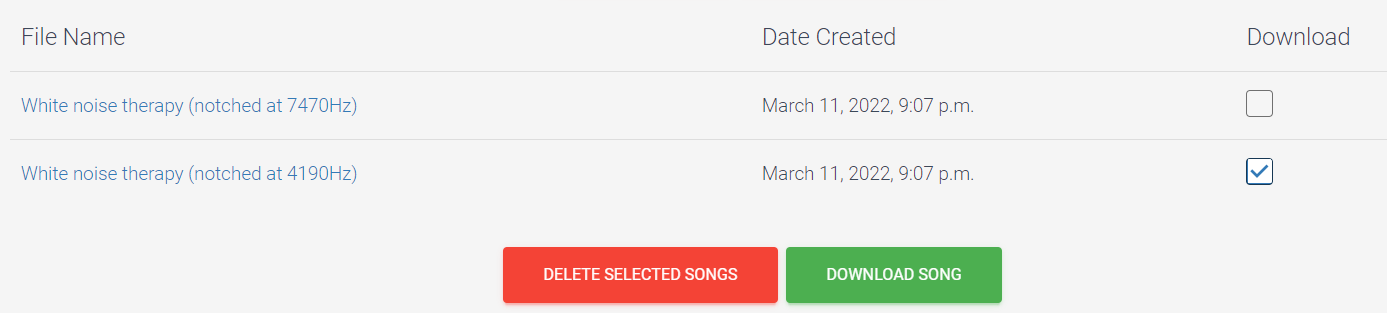
Wie lösche ich alte Songs?
Sie können alte Lieder über die Website hier löschen: audionotch.com/app/listen/. Dies ist über die mobile App nicht möglich.
Wählen Sie die Kontrollkästchen der Lieder aus, die Sie löschen möchten, und klicken Sie dann auf die Schaltfläche "Delete Selected Songs" unten.
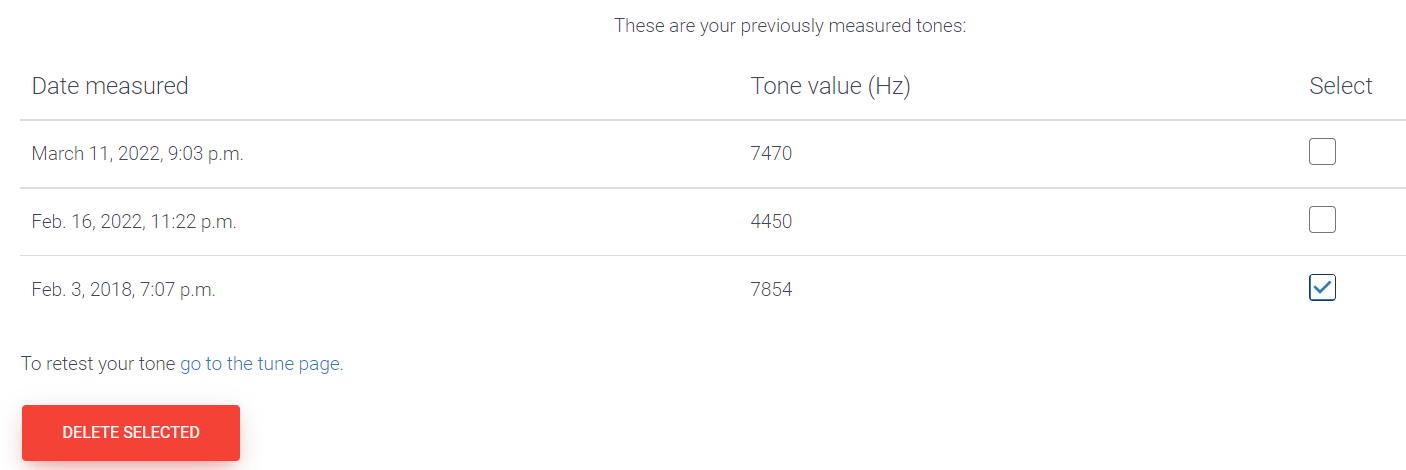
Wie lösche ich alte Töne?
Sie können alte Töne über die Website hier löschen: audionotch.com/app/. Dies ist über die mobile App nicht möglich.
Wählen Sie die Kontrollkästchen der Einträge aus, die Sie löschen möchten, und klicken Sie dann auf die Schaltfläche "Delete Selected" unten.
Kann mir angepasste Kerbfilter-Klangtherapie helfen?
Wenn Sie Tinnitus haben, sprechen Sie zuerst mit einem Arzt. Ihr Tinnitus erfordert möglicherweise eine weitergehende Untersuchung und Behandlung durch einen Arzt.
Notched Sound Therapy gibt es in zwei Varianten: Notched White Noise und Notched Music. Notched White Noise Experiment, Italien
In diesem Experiment hatten die Teilnehmer der Behandlungsgruppe (n = 20) folgende Merkmale:
- Das Alter reichte von 25 bis 75 Jahren, mit einem Durchschnittsalter von 49,3
- 14 von ihnen waren männlich und 6 weiblich
- Der maximale Hörverlust reichte von 10 bis 100 dB, mit einem durchschnittlichen maximalen Hörverlust von 55 dB
- Die Dauer des Tinnitus reichte von 0,25 bis 15 Jahren, mit einem Durchschnitt von 4,3 Jahren
- Die Tinnitusfrequenz reichte von 1 bis 13 kHz (ein kHz = 1.000 Hz), mit einer durchschnittlichen Tinnitusfrequenz von 7,5 kHz
- Die Tinnituslautstärke reichte von 2 bis 42 dB, mit einer durchschnittlichen Lautstärke von 18,4 dB
- Die Tinnitustöne waren nicht unbedingt "Reintöne" (ein Piep- oder Pfeifton) – die Teilnehmer hatten auch die Möglichkeit, ihren Ton mit einem schmalbandigen Rauschton abzugleichen
Zusammenfassend könnte Notched White Noise nützlich sein, wenn:
- Sie sind 18 Jahre oder älter
- Sie haben einen leichten bis mittleren Hörverlust im Bereich Ihres Tinnitus (55 dB)
- Sie können Ihren Tinnituston zumindest annähernd mit unserem kostenlosen Stimmgerät bestimmen
- Sie beabsichtigen, einen dominanten Tinnituston zu behandeln
Betrachten wir nun die Teilnehmerprofile des in Deutschland durchgeführten Experiments mit gekerbter Musik.
- (i) Chronischer (≥ 3 Monate), tonaler (d. h. piep- oder pfeifartiger) Tinnitus mit (ii) dominanten Tinnitusfrequenzen zwischen 1 und 12 kHz und (iii) ohne Hörverlust über 70 dB HL in den Frequenzbereichen einer halben Oktave über und unter der Tinnitusfrequenz. Bei bilateralem Tinnitus sollte die dominante Tinnitusfrequenz laut den Berichten der Teilnehmer zwischen den Ohren nicht unterschiedlich sein.
- Im Alter zwischen 18 und 70 Jahren.
Eine andere Studie schien darauf hinzudeuten, dass gekerbte Musik für Personen mit einer Tinnitusfrequenz unter 8 kHz besser geeignet ist, obwohl im obigen Experiment Teilnehmer mit Tinnitustönen von bis zu 12 kHz rekrutiert wurden.
Zusammenfassend könnte gekerbte Musik nützlich sein, wenn:
- Sie sind 18 Jahre oder älter
- Sie haben weniger als 70 dB Hörverlust im Frequenzbereich einer halben Oktave über und unter Ihrer Tinnitusfrequenz
- Sie können Ihren Tinnituston zumindest annähernd mit unserem kostenlosen Stimmgerät bestimmen
- Sie beabsichtigen, einen dominanten Tinnituston zu behandeln
- Ihre Tinnitusfrequenz liegt unter 8.000 Hz
Was ist, wenn ich mehrere Tinnitustöne habe?
Wenn Sie mehrere Tinnitus-Töne haben, können Sie diese nach Bedarf abgleichen. Unsere Software wurde jedoch nur zur Behandlung eines Tinnitus-Tons gleichzeitig entwickelt.
Wenn Sie möchten, ist es möglich, einen Track mit mehreren Kerbfiltern zu erstellen. Nehmen wir an, Sie haben zwei Tinnitus-Töne t1 und t2 bei zwei verschiedenen Frequenzen, f1 und f2. Um eine Notched-Sound-Therapy-Datei mit mehreren Kerbfiltern zu erstellen:
- Kerben Sie weißes Rauschen bei der ersten Frequenz, f1.
- Laden Sie die MP3-Datei von „Weißes Rauschen – gekerbt bei f1“ herunter.
- Laden Sie die Datei aus Schritt (2) als „Song“ hoch.
- Kerben Sie den Song bei f2, um einen zweiten Kerbfilter bei f2 zu erstellen. Die Datei ist jetzt bei f1 und f2 gekerbt.
- Wiederholen Sie den Vorgang bei Bedarf für weitere Tinnitus-Frequenzen f3, f4, usw…
Wie genau muss ich es einstellen?
Wir haben eine gewisse Toleranz in unser Verfahren zum Kerben des Audios eingebaut. Solange die Tinnitusfrequenz eines Nutzers innerhalb der Breite der Kerbe liegt, hat er seine Tinnitusfrequenz ausreichend genau bestimmt.
Die Breite der Kerbe basiert tatsächlich auf der durchschnittlichen Frequenzselektivität einer Person und beträgt zwei äquivalente Rechteckbandbreiten (ERB).
Die ERB ist frequenzabhängig. Wenn Ihre Tinnitusfrequenz also 10.000 Hz (10 kHz) beträgt, liegt die ERB bei etwa 1.000 Hz, was bedeutet, dass Sie Ihre tatsächliche Tinnitusfrequenz auf 1.000 Hz genau bestimmen müssten (ERB = 107,94*f + 24,7 = 107,94*10 + 24,7 = 1.104 Hz).
Manche Menschen bemerken einen (kleinen) sofortigen Rückgang der Tinnitus-Lautstärke, nachdem sie 2 Minuten lang weißes Rauschen gehört haben, wenn die Therapie korrekt eingestellt wurde.
Für eine umfassende Anleitung zum Abgleich Ihrer Tinnitus-Tonhöhe, einschließlich Tipps zur Oktavverwechslung, atypischen Tinnitus-Geräuschen und wann Sie einen Audiologen aufsuchen sollten, besuchen Sie bitte unseren Tuning-Leitfaden.
Gibt es Unterschiede zwischen
Ja. Es gibt Unterschiede darin, bei welchem Nutzertyp eine bestimmte Art von Notched Sound Therapy wirksam ist.
Normale angepasste Kerbfiltermusik:
- Wirkt bei Patienten, deren Tinnitusfrequenz geringer ist als 8 kHz (bei einer Tinnitusfrequenz von mehr als 8 kHz wirkt es nicht) (3)
Angepasstes weißes Kerbfilterrauschen:
- Wirkt bei Patienten deren Tinnitusfrequenz zwischen 1 bis 13 kHz beträgt (1)
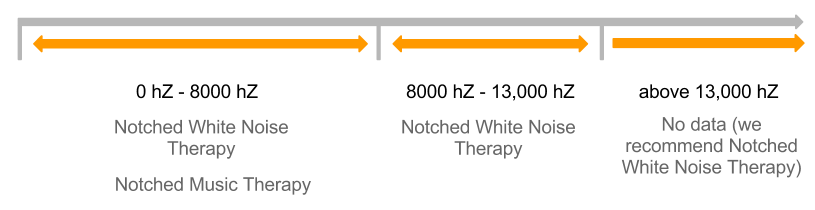
Abbildung 3: Empfohlene Therapie, abhängig von der Tinnitusfrequenz
Natürliche Klänge mit Kerbfilter
Wir bieten diverse natürliche Klänge mit Kerbfilter an. Die Effektivität hängt dabei von der speziellen Beschaffenheit des Tinnitus der Anwender ab sowie vom Frequenzprofil der Klänge. Die effektiven Bereiche der Klänge werden unten zusammengefasst.
| Natürliche Klänge | Theoretische maximale effektive Frequenz |
|---|---|
| Weißes Rauschen | 20,000 |
| Musik | 8,000 |
| Rosa Rauschen | 12,600 |
| Braunes Rauschen | 14,400 |
| Herbstwind | 18,000 |
| Strandstimmung | 15,600 |
| Stadtschwärmer | 17,600 |
| Spülbecken | 17,800 |
| Schwerer Regen | 6,200 |
| Gebirgsbach | 17,000 |
| Sommernacht | 4,400 |
| Wasserfall | 16,200 |
| Wasserfall 2 | 16,200 |
| Weißes Rauschen ohne hohe Frequenzbereiche | 11,700 |
| Spülbecken ohne hohe Frequenzbereiche | 14,400 |
Wie stark ist die Evidenz für die gefilterte Klangtherapie?
Die verfügbaren Belege zugunsten von Notched Sound Therapy finden Sie hier und hier.
In den letzten Jahren wurden mehrere neuere Klangtherapien entwickelt, typischerweise mit der Absicht, sie zu kommerzialisieren. Da Gewinnstreben ein Motivator sein kann, der die Ergebnisse wissenschaftlicher Studien beeinflusst, ist es wichtig, eine gesunde Skepsis gegenüber einzelnen neueren Klangtherapie-Optionen beizubehalten (es gibt einige davon). Die meisten Studien in diesem Bereich haben eine begrenzte Stichprobengröße und wurden nicht von unabhängigen Forschergruppen repliziert.
Nicht überraschend sind unabhängige Wissenschaftler, die die neueren Klangtherapie-Optionen bewertet haben, zu folgendem Schluss gekommen:
"Insgesamt gibt es derzeit unzureichende Evidenz, um den routinemäßigen Einsatz einzelner Klangtherapie-Optionen zu unterstützen oder zu widerlegen. Es ist jedoch wahrscheinlich, dass Klangtherapie in Kombination mit Aufklärung und Beratung für Patienten generell hilfreich ist."
Die Notch-Klangtherapie (Notched Sound Therapy) umfasst die Identifizierung der Tinnitusfrequenz eines Nutzers und die anschließende Audiobearbeitung durch Entfernung der Schallenergie bei und um die Tinnitusfrequenz herum. Weißes Rauschen oder Musik können gekerbt werden, was zu gekerbtem Weißen Rauschen oder gekerbter Musik führt. Anhaltendes Hören dieser Klänge soll das Tinnitustonvolumen durch laterale Hemmung der tinnituserzeugenden auditorischen Neuronen verringern. Sie wurde von unabhängigen Gruppen italienischer und deutscher Forscher entwickelt, die anfänglich eine Volumenreduktion von 75% bzw. 26% erzielten. Eine größere nachfolgende klinische Studie ergab eine geringere Volumenreduktion mit gekerbter Musik als in den ursprünglichen Experimenten beobachtet. Eine kritische Überprüfung der Notch-Klangtherapie kam zu dem Schluss, dass es immer noch unzureichende Evidenz gibt, um sie für den klinischen Standardeinsatz zu empfehlen. Weitere Forschungsergebnisse sind hier verfügbar.
Wie lange dauert es, bis Kerbfilter-Klangtherapie wirkt?
Dieses Diagramm zur Lautstärkesenkung beruht auf den Daten aus Lugli, 2009 (1) und zeigt den durchschnittlichen Lautstärkerückgang bei Patienten. WWN beschreibt weißes Kerbfilterrauschen, die zwei anderen Linien zeigen Kontrollgruppen (d.h. Weißes Rauschen ohne Kerbfiler). Man sieht, dass mit einem graduellen Rückgang der Lautstärke zu rechnen ist, der mit fortlaufender Zeit stärker wird.
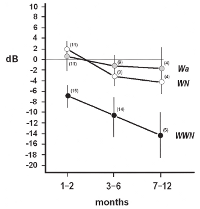
Abbildung 4: Durchschnittliche Verringerung der Lautstärke durch Therapie mit weißem Kerbfilterrauschen (WWN) gg. Kontrollgruppe.
Ist der Effekt permanent?
Im Allgemeinen geht man davon aus, dass der Effekt stärker wird und länger anhält, je mehr Stunden man sich die Therapie anhört und je mehr Wochen man sie anwendet. (4)
Wenn Sie die Therapie nur für einen sehr kurzen, intensiven Zeitraum (ein paar Tage) anwenden, wird die Lautstärkereduktion nicht dauerhaft sein und sich wahrscheinlich im Laufe der Zeit vollständig umkehren. (3)
Daher ist es wichtig, mehrere Monate lang die gekerbten Klänge zu hören, wie es die Teilnehmer in den mit Notched Sound Therapy durchgeführten Experimenten getan haben. Diese Therapie wurde erst kürzlich entdeckt und es gibt noch keine mehrjährigen Nachfolgestudien an Nutzern.
Es ist möglich, dass sich die Verringerung Ihrer Tinnituslautstärke teilweise (oder sogar vollständig) umkehrt, wenn Sie die Therapie vollständig beenden (nachdem Sie die Therapie mehrere Monate gehört haben). Glücklicherweise können Sie in diesem Fall einfach wieder mit dem Hören der Therapie beginnen und Ihre Tinnituslautstärke erneut reduzieren.
Warum muss ich meine Tinnitus-Frequenz während der Behandlung immer wieder neu überprüfen?
Über mehrer Monate der Behandlung hinweg kann sich Ihre Tinnitusfrequenz ändern. Das ist ganz normal und kann auch eine Reaktion auf die Behandlung sein.
Wenn die Kerbfrequenz NICHT mit Ihrer Tinnitusfrequenz übereinstimmt, wird die Therapie NICHT wirken. Die Kerbfrequenz muss mit Ihrer Tinnitusfrequenz übereinstimmen, damit es einen therapeutischen Effekt gibt.
Daher empfehlen wir, Ihre Tinnitusfrequenz während Ihres Behandlungsverlaufs mehrfach mit unserer Abstimmungs-App erneut zu testen. Wir empfehlen wöchentliche Tests im ersten Behandlungsmonat und danach Tests alle zwei Wochen.
Um den Nutzern bei der Umsetzung der AudioNotch-Tinnitusbehandlung zu helfen, haben wir einen einfachen empfohlenen Behandlungsplan angeboten, der auf den bisher verfügbaren wissenschaftlichen Erkenntnissen basiert.
Wo gibt es wissenschaftliche Evidenz?
Tinnitus-Betroffene sollten berechtigterweise skeptisch gegenüber Behandlungen sein, die eine Heilung des Tinnitus versprechen – viele dieser Behauptungen werden ohne jegliche wissenschaftliche Evidenz aufgestellt. Darüber hinaus basieren selbst Behandlungen mit wissenschaftlicher Unterstützung oft auf kleinen Studien, die weitere Folgeforschung erfordern.
Tailor-Made Notched Sound Therapy basiert auf mehreren Experimenten, die von unabhängigen Forschergruppen durchgeführt wurden. Wir ermutigen unsere Kunden, die wissenschaftlichen Originalbelege zu prüfen, auf denen AudioNotch basiert. Wir haben auch einen Link zu einer kritischen Überprüfung von Notched Sound Therapy beigefügt. Zusammenfassend sind die Belege für Notched Sound Therapy vorläufig und erfordern größere Studien, um definitivere Schlussfolgerungen über ihre Wirksamkeit zu ziehen.
In der Zwischenzeit haben wir uns bemüht, diesen vielversprechenden Ansatz den Nutzern jetzt zugänglich zu machen, um ihnen zu helfen. Zu Ihrer Bequemlichkeit haben wir unten Links zu diesen Publikationen eingefügt.
AudioNotch Inc. ist ein unabhängiges Unternehmen, und wir stehen in keiner Verbindung zu den Wissenschaftlern, die diese Forschung durchgeführt haben.
Therapie mit normaler angepasster Kerbfiltermusik:
- Customized Notched Music Training Reduces Tinnitus Loudness
- Listening to Tailor-Made Notched Music Reduces Tinnitus Loudness and Tinnitus-Related Auditory Cortex Activity
- Short and Intense Tailor-Made Notched Music Training Against Tinnitus: The Tinnitus Frequency Matters
- Clinical Trial on Tonal Tinnitus with Tailor-Made Notched Music Training
- Preliminary analysis of the effects of tailor-made notched music therapy on chronic idiopathic tinnitus.
- A Real-time Tinnitus Treatment System Using Tinnitus Frequency Removal and Adjacent Frequency Amplification on [a] Mobile Device
Varianten der gekerbten Musiktherapie:
- Combining Transcranial Direct Current Stimulation and Tailor-Made Notched Music Training to Decrease Tinnitus-Related Distress — A Pilot Study
- Tinnitus therapy using tailor-made notched music delivered by a smartphone application and Ginko combined treatment: A pilot study
Angepasstes weißes Kerbfilter-Rauschen:
Übersichtsarbeiten zum Gebiet der Notched Sound Therapy:
- Listening to Filtered Music as a Treatment Option for Tinnitus: A Review
- Critical Review: Efficacy of notched-sound therapy for neural plasticity mediated tinnitus treatment (unpublished)
Überblick über Klangtherapie:
Wie funktioniert es?
Bitte lesen Sie den Bereich Wie es funktioniert auf unserer Seite, um eine einfache technische Beschreibung unserer Behandlung zu erhalten. Die wissenschaftliche Erklärung ist sehr komplex, aber wir haben uns um eine verständliche und anschauliche Erklärung bemüht.
Für diejenigen unter Ihnen mit umfassenderen Kenntnissen in den Neurowissenschaften empfehlen wir die Lektüre der oben verlinkten begutachteten wissenschaftlichen Publikationen. Im Abschnitt "Discussion" jeder Publikation finden Sie eine technische Erklärung des vorgeschlagenen Wirkmechanismus unserer Behandlung. (1, 2)
Kurz gesagt scheint eine Kombination aus lateraler Inhibition und nachfolgenden Veränderungen im auditorischen Kortex durch kortikale Plastizität beteiligt zu sein. (2) Die gezielte Stimulation der auditorischen Neuronen, die nicht die Tinnitus-Frequenz erzeugen, scheint die auditorischen Neuronen, die die Tinnitus-Frequenz erzeugen, lateral zu hemmen. (2) Anhaltende laterale Hemmung verändert die Verbindungen zwischen den Neuronen im auditorischen Kortex, sodass das Grundniveau der Hemmung ansteigt (auch wenn die Nutzer nicht Musik hören). (2) Dadurch nimmt die Tinnitus-Lautstärke ab.
Welcher Behandlungsplan wird empfohlen?
Im Behandlungsplan von AudioNotch wird bedacht, dass sich die Tinnitusfrequenz während der Behandlung ändern kann.
So ist es notwendig, regelmäßig die eigene Tinnitusfrequenz neu einzustellen (d.h. zu "tunen"), um so sicherzustellen, dass die Kerbfrequenz genau passt. Die Kerbfrequnz muss mit der Tinnitusfrequenz übereinstimmen, damit die Therapie wirkt. Deshalb besteht die Behandlung aus folgendem Kreislauf, der sich ständig wiederholt:
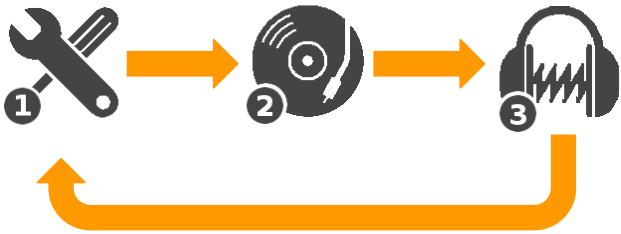
Abbildung 4: Der empfohlene Behandlungsplan für AudioNotch
Behandlungsplan (für Musik oder Weißes Rauschen)
Achten Sie bei anhören bitte auf eine angenehme Lautstärke! Zu hohe Lautstärke kann das Gehör schädigen und den Tinnitus verschlimmern!
Wir empfehlen, eine Stunde am Tag AudioNotch anzuhören. Versuchen Sie, das Hören über den Tag zu verteilen (d. h. verschiedene Sitzungen am Morgen, Nachmittag und Abend). Wenn es hilfreich ist, erhöhen Sie auf 2 bis 3 Stunden täglich.
Wir empfehlen Ihnen, Kopfhörer zu verwenden, die Umgebungsgeräusche abschirmen, wie z. B. Kopfhörer mit Geräuschunterdrückung oder In-Ear-Kopfhörer. In der Regel sind ohrumschließende (Over-Ear-)Kopfhörer hierfür effektiv. Alternativ können Kopfhörer mit aktiver Geräuschunterdrückung verwendet werden. In-Ear-Ohrhörer können ebenfalls wirksam sein, sofern sie externe Geräusche effektiv abschirmen.
Wie laut sollte die Therapie sein?
Achten Sie wie zuvor beim Hören bitte darauf, in sicherer Lautstärke zu hören! Zu lautes Hören kann Ihr Gehör schädigen und Ihren Tinnitus verschlimmern. Hören Sie die Klangtherapie ungefähr in der Lautstärke Ihres Tinnitus, überschreiten Sie jedoch kein sicheres Lautstärkeniveau.
Welchen Support bietet AudioNotch?
AudioNotch bietet E-Mail-Support für die Dauer des Abonnements. In der Regel antworten wir innerhalb von ein bis zwei Werktagen auf alle Support-Anfragen.
Wird die Behandlung durch die Nutzung von MP3s beeinträchtigt?
Nein. Obwohl AudioNotch die maßgeschneiderte Klangtherapie als MPEG-3-Dateien bereitstellt, haben wir darauf geachtet, dass der Klang die angemessene Qualität aufweist. Die Verwendung von MP3-Dateien ermöglicht es uns, die größtmögliche Bandbreite an Wiedergabegeräten für die größte Anzahl von Tinnitus-Betroffenen zu unterstützen.
Aus einer technischeren Perspektive stellen wir sicher, dass bei Nutzern mit einem hochfrequenten Ton (d. h. über 8000 Hz) keine Tiefpassfilterung bei der MP3-Kodierung stattfindet. Für Nutzer mit einem hochfrequenten Ton kodieren wir außerdem mit einer hohen Bitrate von 320 kbps. Aufgrund der Signalverarbeitungstheorie ist eine erhöhte Bitrate für Personen mit einem niederfrequenten Ton nicht erforderlich.
Sollte ich mit beiden Ohren hören, wenn ich nur auf einem Ohr Tinnitus habe?
Viele Menschen mit einseitigem Tinnitus (Tinnitus in nur einem Ohr) schreiben uns und fragen, ob sie AudioNotch in beiden Ohren hören sollten, da nur ein Ohr betroffen ist.
Die Antwort? Interessanterweise sollten Sie in beiden Ohren hören, auch wenn Ihr Tinnitus nur in einem Ohr auftritt. Es ist eine kontraintuitive Antwort.
Der Grund dafür ist, dass in den Experimenten, auf denen die Therapie basiert, die Teilnehmer in beiden Ohren behandelt wurden, selbst wenn sie einseitigen Tinnitus (Tinnitus in einem Ohr) hatten. Dieser Ansatz war möglicherweise wirksam, weil Tinnitus ein Phänomen ist, das in der Hörrinde des Gehirns auftritt, und beide Ohren Input in die Hörrinde liefern. Die Neuronen, die in dieser Region spontan feuern und dadurch den Tinnituston erzeugen, können noch durch Input vom kontralateralen Ohr beeinflusst werden.
Rückerstattungen, Dienste und Support
Der Kauf eines AudioNotch-Programms berechtigt Sie zu technischem Support per E-Mail zur Unterstützung bei der Nutzung der AudioNotch-Software (bitte beachten Sie, dass wir keine medizinische Beratung oder Bewertungen per E-Mail anbieten, sondern ausschließlich technischen Software-Support). Die meisten E-Mail-Anfragen werden innerhalb von 1-2 Werktagen beantwortet.
Wir bieten eine bedingungslose 30-Tage-Geld-zurück-Garantie für Käufe über unsere Website. Für In-App-Käufe über unsere mobilen Apps können wir jedoch keine Rückerstattungen gewähren.
Wichtig: AudioNotch-Abonnements verlängern sich niemals automatisch. Wenn Ihr Abonnement abläuft, müssen Sie manuell ein neues Abonnement erwerben, wenn Sie den Dienst weiter nutzen möchten. Das bedeutet, dass Ihnen niemals unerwartet Kosten für Abonnementverlängerungen berechnet werden.
Wie erhalte ich eine Rückerstattung für einen Apple In-App-Kauf?
Wenn Sie AudioNotch über den Apple App Store als In-App-Kauf erworben haben, können Sie eine Rückerstattung direkt bei Apple beantragen. So geht's:
- Gehen Sie zu reportaproblem.apple.com und melden Sie sich mit Ihrer Apple-ID an
- Tippen oder klicken Sie auf "I'd like to" und wählen Sie dann "Request a refund"
- Wählen Sie den Grund für die gewünschte Rückerstattung und dann Next
- Suchen Sie den AudioNotch-App-Kauf oder das Abonnement und wählen Sie Submit
Apple wird Ihre Anfrage prüfen und antwortet in der Regel innerhalb von 24-48 Stunden. Falls genehmigt, kann es zusätzliche Zeit dauern, bis die Rückerstattung auf Ihrer Zahlungsmethode erscheint.
Hinweis: Wenn Sie den Kauf auf der Apple-Rückerstattungswebsite nicht finden können, überprüfen Sie Ihre E-Mails auf Quittungen von Apple, um festzustellen, welche Apple-ID für den Kauf verwendet wurde. Möglicherweise müssen Sie sich mit einer anderen Apple-ID anmelden, falls Sie mehrere Konten haben.
Für detailliertere Anweisungen besuchen Sie Apples offizielle Support-Seite für Rückerstattungen.
Was ist, wenn das Hören von Notched Sound Therapy vorübergehend die Lautstärke des Tinnitus erhöht?
Es scheint wahrscheinlich, dass ein Teil der Tinnitus-Betroffenen bei jeder anhaltenden Exposition gegenüber Audio jeglicher Art eine Empfindung einer erhöhten Tinnituslautstärke erfahren wird.
Einige Notched-Sound-Therapy-Nutzer erleben einen vorübergehenden Anstieg der Tinnitus-Lautstärke nach dem Hören der Therapie. Dies zeigt sich unmittelbar beim erstmaligen Hören der Klangtherapie. Basierend auf unserer Erfahrung und Analyse der Literatur ist dieser Anstieg der Tinnitus-Lautstärke vorübergehend und nach Beendigung der Therapie reversibel. Falls er bei einer Person auftritt, geschieht dies beim erstmaligen Hören von Audio, das mit einem Kerbfilter-Algorithmus verarbeitet wurde.
In einigen Fällen kann das Hören von Notched Sound Therapy die Grundlautstärke des Tinnitus vorübergehend und reversibel erhöhen. Es gibt mehrere mögliche Erklärungen:
- Falsch festgestellte Tinnitusfrequent, so dass der Kerbfilter nicht mit der eigentlichen Tinnitusfrequenz des Nutzers übereinstimmt.
- Hören von Notched Sound Therapy bei einer unsicheren Lautstärke, da jedes laute Geräusch den Tinnitus verschlechtern kann, wenn es zu laut ist.
- Einige Nutzer haben ihre Tinnitusfrequenz korrekt bestimmt und hören in sicherer Lautstärke, und trotzdem erleben sie eine Zunahme der Lautstärke ihres Tinnitus. Dies kann möglicherweise auf eine auditorische Täuschung zurückzuführen sein, die als "Zwicker-Ton" bekannt ist, oder es kann an der individuellen Reaktion dieser Person auf das Hören von gekerbtem Audio liegen.
Wenn dies bei Ihnen auftritt, während Sie Notched Sound Therapy hören, unternehmen Sie die folgenden Schritte:
- Überprüfen Sie, ob die Therapie tatsächlich nicht wirkt. Manchmal steigt die Tinnitus-Lautstärke unmittelbar nach einer Sitzung von Notched Sound Therapy vorübergehend an, dennoch könnte man insgesamt eine Abnahme der Grundlautstärke des Tinnitus erfahren, was zu einer allgemeinen Reduktion der Tinnitus-Lautstärke führt.
- Stellen Sie sicher, dass Sie die Tinnitusfrequenz richtig gefunden haben (so gut es geht) und dass sie keine gefährliche Lautstärke benutzen.
- Wenn die oben genannten Schritte nicht helfen, hören Sie auf, Notched Sound Therapy zu hören. Nach einer Ruhephase wird Ihre Tinnitus-Grundlautstärke auf ihr normales Niveau zurückkehren. Beantragen Sie dann eine Rückerstattung per E-Mail (support@audionotch.com) gemäß unserer normalen Rückerstattungsrichtlinie (diese Richtlinie ermöglicht eine Rückerstattung innerhalb von 30 Tagen. Nach unserer Erfahrung sind alle Fälle eines vorübergehenden Anstiegs der Tinnitus-Grundlautstärke innerhalb dieses anfänglichen Zeitraums aufgetreten).
Die vorübergehende Zunahme der Tinnituslautstärke scheint bei 5-10% der Nutzer aufzutreten und ist nach Beendigung der Therapie reversibel.
Quellen
- Lugli M, Romani R, Ponzi S, Bacciu S, Parmigiani S (2009) The windowed sound therapy: a new empirical approach for an effective personalized treatment of tinnitus. Int Tinnitus J 15:51-61.
- Okamoto H, Stracke H, Stoll W, Pantev C (2010) Listening to tailor-made notched music reduces tinnitus loudness and tinnitus-related auditory cortex activity. Proc Natl Acad Sci U S A 107: 1207-1210.
- Teismann, H., Okamoto, H., Pantev, C. (2011). Short and intense tailor-made notched music training against tinnitus: The tinnitus frequency matters. Plos ONE, 6, 1-8.
- Eggermont, J.J., Roberts, L.E. (2004). The neuroscience of tinnitus. Trends in neurosciences, 27, 676-82.
- Rajan, R. (1998). Receptor organ damage causes loss of cortical surround inhibition without topograhic map plasticity. Nature Neuroscience, 1, 138-143.
- Dobie RA (2003) Depression and tinnitus. Otolaryngol Clin North Am 36: 383–388.
- Jastreboff PJ (1990) Phantom auditory perception (tinnitus): mechanisms of generation and perception. Neurosci Res 8: 221–254.
- Heller AJ (2003) Classification and epidemiology of tinnitus. Otolaryngol Clin North Am 36:239–248.
- Saunders JC (2007) The role of central nervous system plasticity in tinnitus. J Commun Disord 40:313–334.
- Rauschecker JP, Leaver AM, Muhlau M (2010) Tuning out the noise: limbic-auditory interactions in tinnitus. Neuron 66: 819–826.